Posts: 36,467
Threads: 2,709
Joined: Oct 2005
Reputation:
3
12-13-2017, 10:03 AM
(This post was last modified: 12-13-2017, 10:05 AM by Drunk Monk.)
#5 RZA & DM
Quote:[font=微软雅黑]武当“型男”排名[/font]
[font=微软雅黑][font=微软雅黑]收藏[/font][/font]
[font=微软雅黑] 作者:大昊 发布时间:2016-06-12 阅读数:1871 评论数:0[/font]
[font=微软雅黑]在Wu-tang clan发行专辑Enter the Wu-Tang (36 Chambers) 二十周年前夕,一场大动作正在酝酿。Wu-Tang品牌刚推出了一批纪念36 Chambers 20周年服饰,而且据说还有更多武当装备要到货,包括与DC的合作。(武当粉已经没法坐定了把!)回首过往,Wu-tang大家族及其分支在二十年的岁月里改变了整个音乐流派,也改变了Hip Hop的穿着风格。他们的范儿就像他们的音乐一样硬核,也正如同他们的音乐,每个团队中的成员都在这上面有自己独特鲜明的天赋。[/font]
团体内的竞争促使每个成员在歌中增加猛料,也让他们费心打理着装扮——Polo衫, Wallabees(袋鼠鞋)—— 看看整个东海岸,我们就知道它们引领了街头服饰(streetwear)的潮流。在此我们要鞠躬感谢武当。话虽这么说,一些成员必须比其他人更加有型!仅仅局限于此列表九个原始创始成员,我们根据他们的穿衣风格给他们排了下座。
9. Masta Killa
严肃的说,哥们。有没有人见过MASTA KILLA的头发?这位老兄一直带着Doo Rag。他的品味可能在Wu-tang中是最后的。但如果他开始摇摆丝绿色佩斯利长袍,他排位可能会向上攀升点。
8. Inspectah Deck
如果这是一个家乡自豪感的榜单,INS或许会排到第一。即使像你的城市致敬确实值得我们的掌声,但他的范儿确实有上升的空间,但我们希望他不要弄丢他那条武当链子。
7. U-God
胡子帮出没。如果你需要灵感的话看看U-God。他一直保持着他的小胡子。另外,U-God穿起Wu Wear像一位专家。他也许永远上不了T台,但当“that banging shit”的广告出现在Wu-Tang’s Shaolin的店面时总会使孩子们想到Wu Wear又要出新款了。
6. GZA
在Wu-tang成立之前,GZA已说唱圈活跃了。他也是武当派成员中穿衣风格最轻松的。他穿衣从来不离帽衫,运动夹克。他的范儿可以完美搭配一个舒适的沙发。他去哈佛大学开讲座与喜欢下棋可以给他加分——因为聪明永远是时尚。
continued next post
Quote:Quote:
5. RZA
他的所有衣服都有亚洲文明的灵感。他最牛逼的地方是,他不关心你在想什么,或者你喜欢什么。他喜欢武术,就会穿上武术袍。此外,他的脸也作为LOGO,印在过Supreme T恤上。
4. Method Man
Method Man曾在“Method Man”中唱道,“你不认识我,你不知道我的风格。”他可能是正确的,其风格非常有冒险精神。但他喜欢加大尺码的态度却总是让人舒服。不是每个说唱歌手,在他们穿衣的保留节目中有浴袍、狼牙套和击球手套。
3. Ol’ Dirty Bastard
老实说,甚至无所谓ODB穿什么。只要看看他史诗般的头发,没有人需要去注意到别的。不过,他没有只依靠一个在派对上招摇的伎俩。他是最先开始玩儿穿衣high-low搭配的老哥(那时候Pharrell Kanye A$AP Rocky都在那儿呢)。某天,他穿起街牌,第二天他可能穿的却是一个干净的皮夹克和上档次的帽子。
continued next post
Quote:2. Raekwon
他一开始从纽约城的大毒枭哪里获得穿衣灵感,最后也可以穿一件简简单单的纯白Supreme。没有他怎么能接近顶端,别说不是他引起了你对老式的Polo衫和Tommy Hilfiger的兴趣。大厨(Raekwon的别称Chef)甚至挽起一条裤腿走上过Tommy的T台,就是那么有范儿。
1. Ghostface Killah
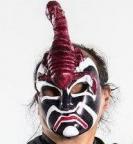
正如他在“New God Flow”里的歌词——” Ya nigga, y’all had my, I had my Jesus piece since 94”。在这点上,他的豪华首饰,长袍,和鬼脸面具都是一他的最具代表性的符号。就像武当派本身,如果鬼脸要去做些风格的改变,他会毫不犹豫的倾尽全力去执行它。
![[Image: 2242246111-25.jpg]](http://www.51555.net/home/uploads/allimg/140912/2242246111-25.jpg)
Shadow boxing the apocalypse
Posts: 36,467
Threads: 2,709
Joined: Oct 2005
Reputation:
3
The State of Martial Arts Publishing Today – A Roundtable Discussion
https://chinesemartialstudies.com/2018/0...discussion

Shadow boxing the apocalypse
Posts: 36,467
Threads: 2,709
Joined: Oct 2005
Reputation:
3
I was just interviewed by Laurie Anderson.
She's working on finishing a book on Tai Chi that Lou Reed was working on when he passed. I don't know if my contributions will make the book, but it was fun to chat with her again. She has such a hypnotic voice.
Shadow boxing the apocalypse
Posts: 17,125
Threads: 1,052
Joined: Jan 2016
Reputation:
1
Tell Scapino. Hee hee.
As a matter of fact, my anger does keep me warm
Posts: 36,467
Threads: 2,709
Joined: Oct 2005
Reputation:
3
Did I ever send him my Laurie Anderson interview? Now I wonder... That was actually better because it was one-on-one face-to-face for like a solid 20 minutes. This was a phoner for an hour, but there were some other interviewers helping her - the ones who are more in charge of the book.
Shadow boxing the apocalypse
Posts: 36,467
Threads: 2,709
Joined: Oct 2005
Reputation:
3
I will be speaking on Hip-Hop & Martial Arts at the Oakland Museum of California on June 30th.
Quote:Tour | RESPECT: Hip-Hop Style & Wisdom
Saturday, June 30, 2018, 1–1:45 pm
add to calendar
Experience special exhibition RESPECT: Hip-Hop Style & Wisdom with a Hip-Hop Educator as your guide. Discover the under-recognized story of one of the most influential cultural and social movements of the last 50 years while you explore highlights of the exhibition and your creative side on this interactive tour.
Included with Museum special exhibition admission. If you’re interested in attending a tour, please select a timed ticket entry for 1 pm.
Shadow boxing the apocalypse
Posts: 36,467
Threads: 2,709
Joined: Oct 2005
Reputation:
3
03-23-2018, 01:28 PM
(This post was last modified: 03-23-2018, 01:30 PM by Drunk Monk.)
Here's a better link but the date is messed up - I'm speaking on June 30 for the martial arts talk, not May 26 for the wellness talk.
Quote:Chop It Up
Last Saturday of the month April–July, 2018
3–5 pm
In Hip-Hop culture, the barbershop is known as a community hub for news and debate. Inside special exhibition RESPECT: Hip-Hop Style & Wisdom, gather around the Barbershop space inside the gallery to learn from guest speakers focusing on new topics each month. Explore unexpected aspects of Hip-Hop culture. Included with Museum special exhibition admission.There is a $4 charge in addition to general admission pricing for special exhibitions.
The themes include: - April 28: Hip-Hop & Entrepreneurship
- May 26: Hip-Hop & Wellness featuring Gene Ching, Publisher of Kung Fu Tai Chi & kungfumagazine.com, and Adisa “The Bishop” Banjoko, Founder and Executive Director of Hip Hop Chess Federation.
- June 30: Hip-Hop & Martial Arts
- July 28: Next Generation & the Future of Hip-Hop
http://museumca.org/press/oakland-museum...-hop-style
Shadow boxing the apocalypse
Posts: 36,467
Threads: 2,709
Joined: Oct 2005
Reputation:
3
04-02-2018, 10:47 AM
(This post was last modified: 04-02-2018, 10:48 AM by Drunk Monk.)
Quote:Episode 280 – Mr. Gene Ching
![[Image: comment-dot.png]](http://www.whistlekickmartialartsradio.com/wp-content/themes/podcast/images/comment-dot.png) April 2, 2018 by Julius Santiago April 2, 2018 by Julius Santiago
Mr. Gene Ching is a martial arts practitioner and the publisher of Kung Fu Tai Chi Magazine.
Quote:There’s no point where you can kinda sit back on your laurel leaves and go yeah, I’ve got this, I’ve got my blackbelt or what have you…
Mr. Gene Ching – Episode 280
Our guest today had been exposed to the martial arts at an early age when he was playing with toy weapons at home. Mr. Gene Ching is from a family of martial artists and he has found his success not only in handling weapons but through writing for the martial arts community as well. Mr. Ching has trained with a lot of martial arts greats and his story is definitely inspiring. Listen to find out more about Mr. Gene Ching.
00:55
01:16:52
Show Notes
Kung Fu Tai Chi Magazine
Man at Arms
Twitter.com/geneching
Facebook.com/gene.ching
On this episode, We talked about:
Donnie Yen, Jackie Chan, Sammo Hung, Jet Li, Danny Trejo, Shaw Brothers’ movies
[img=657x0]https://i2.wp.com/www.whistlekickmartialartsradio.com/wp-content/uploads/2018/04/ep280-wide.jpg?resize=1024%2C576[/img]
Interviewed on the Whistlekick podcast.
Shadow boxing the apocalypse
Posts: 17,125
Threads: 1,052
Joined: Jan 2016
Reputation:
1
I'm leaving this here for DM so he knows his friend Laurie is talking to Neil Gaiman.
Neil Gaiman's blog about Laurie Anderson
As a matter of fact, my anger does keep me warm
Posts: 36,467
Threads: 2,709
Joined: Oct 2005
Reputation:
3
Shadow boxing the apocalypse
Posts: 36,467
Threads: 2,709
Joined: Oct 2005
Reputation:
3
Quote:From Drunk Monks to Boozy Brunch: A Brief History of Drinking in the Morning
Aaron Goldfarb
Illustrations By Danielle Grinberg
“It’s 5 o’clock somewhere!” lamely jokes the guy in your office who thinks he’s being naughty for having a light beer at a 3:30 p.m. offsite meeting.
Today his coworkers might snicker at his so-called transgressiveness. Yet for most of history, drinking before 5:00 p.m. was perfectly acceptable, if not necessary. Many people drank in the morning because there was nothing much else to drink. Other beverages — like water — were dirty and could potentially kill you.
Yes, throughout time there have been plenty of instances where drinking before noon wasn’t just perfectly acceptable, it was a means of survival.
DRUNK MONKS
If the archetypal morning drinker these days is a disgruntled third-shift worker, back mid-millenium, it would have been a clergyman. It makes sense, as monasteries were where the majority of beer and wine was made at the time.
German monks were producing beer as early as the 14th century. By 1634 the friars at Neudeck ob der Au (Paulaner Brewery) in Munich were slamming morning dopplebocks during Lent. Acting as liquid bread during this 46-day fast, it’s no wonder that their strong beer, named salvator, translates to “savior.”
Meanwhile, Belgian monks had begun producing their own table beer. Called “small” beers, these were low-ABV (under 3 percent) thirst-quenchers they could bring to the breakfast or lunch tables to enjoy with their meals. Some monastery records show they were allowed up to a gallon of ale per day. Which meant… they were probably starting early.
’TIS THE SAISON
Eventually, as commercial agriculture developed in Europe, morning drinking became an integral part of blue-collar life. In the Wallonia region of southern Belgium, and then northern France, farms started brewing their own beers in the winter so it would then be ready to drink in the summer, during harvest time. These pale, light, and slightly funky beers known as “saison” and “bière de garde” were refreshing, fortifying, and safe to slug all day by the workers. Historian Léo Moulin, in his book “Eating and Drinking in Europe: A Cultural History,” estimates that farm workers drank around 5 liters of beer per day during the Middle Ages.
FRÜHSCHOPPEN
Translating to “an alcoholic drink before midday in company,” Frühschoppen has been part of Bavarian life in Germany and Austria since perhaps the 16th century. These pre-noon beers were traditionally served after church on Sundays and holidays, and were usually a weissbier (wheat beer). The beer was also often accompanied with food like wurst and pretzels.
In 2015, President Barack Obama even hoisted a pint with Chancellor Angela Merkel at 11 a.m. one morning. Unfortunately, his beer was non-alcoholic.
ELEVENSES
The English have had the tradition of “elevenses” since the early 1800s — it was a break at, duh, 11:00 a.m. during which the upper crust would have a small snack and a spot of tea. American workers of all sorts quickly copied the tradition and improved it, adding the one thing that improves everything: whiskey. In fact, many employers were expected to supply their workers with the whiskey for getting blotto on the clock.
By the time that the Industrial Revolution was in full swing, and government employment oversight became a bigger deal, elevenses was gone. Work has been pretty boring ever since.
THE MORNIN’S MORNING
Between the Civil War and World War II, many American urban sophisticates still enjoyed an eye-opener, though, which they poetically called a mornin’s morning.
Washington D.C. politicians of the 1800s, like Colonel Joe Rickey, especially liked an early-hour libation — which, for him, was typically bourbon on ice topped with seltzer from a siphon. In 1883, a bartender at Shoomaker’s in Washington added a lime to Rickey’s drink, thereby inventing the Rickey cocktail.
[img=800x0]https://static.vinepair.com/wp-content/uploads/2018/05/DrinkingInAM-Inside.png[/img]
THE PRESIDENTIAL EYE-OPENER
Oddly, the U.S. presidency has also produced a long roster of morning drinkers. (Well, it is a tough gig.) John Adams famously downed a “jill of cider” from a tankard (picture a beer stein) with breakfast every morning — he thought it diluted the overnight phlegm and bile in his stomach. Harry Truman threw back a shot of Old Grand-Dad every day after his morning walk. Gerald Ford often had a dry Martini before lunch. Across the pond, Prime Minister Winston Churchill enjoyed starting his day with German white wine, which the Brits call “hock.”
MORNING GLORY FIZZ
There was actually a time where there were morning cocktails besides those “bottomless” and garnished with celery stalks. Like the Morning Glory Fizz, first proposed by Harry Johnson in his 1882 “New and Improved Bartender’s Manual.” The drink included a wine glass of Scotch, 3 or 4 dashes of absinthe, lemon and lime juices, sugar, and an egg white, then topped with seltzer.
As Johnson wrote, the “drink must be drank as soon as prepared, so as not to lose the effect of it. The author respectfully recommends the above drink as an excellent one for a morning beverage, which will give a good appetite and quiet the nerves.”
In the 1887 update of Jerry Thomas’s seminal “Bartenders’ Guide,” Thomas introduced a Cognac-based riff on the morning fizz. Called the Saratoga Brace-Up, it used less absinthe, subbed in Cognac for Scotch, and used a whole egg.
“A GLASS OF BITTERS”
As cocktail historian David Wondrich discusses in his acclaimed “Imbibe!”, the Sling — alcohol, often gin, with a little sugar and a little water — was popular during Singapore mornings from as early as the late-18th century. He writes that it “wasn’t just a hangover cure… It was an everything cure.” It also allowed people to act like they weren’t getting buzzed at breakfast.
As Wondrich concludes, “The morning Bitters-and-Sling man could pretend, not least to himself, that he wasn’t a morning dram drinker (which would be bad) and that he was only following the path of wisdom by taking a little preventative medicine.”
“EARLYHOUSE” PUBS
As recently as 100 years ago, many English and Irish pubs served drinks throughout the morning, and a beer with breakfast was expected for all sorts of workers.
Called “earlyhouses,” and first officially licensed in 1927, they typically opened around 7 in the morn, and were meant to provide fortification to help get early a.m. workers (like, say, milkmen, greengrocers, dock workers, and fishermen) through their dreary days. These types of pubs lasted well into the mid-20th century and, though a few earlyhouses still exist in London and Dublin, they are now said to be most popular with tourists.
GAMMEL DANSK
This Danish bitter liqueur was first brought to market in 1964, and it almost immediately became an indelible part of the country’s morning routine. Made with 29 herbs and spices, the libation has a note on the label reading “Gør godt om morgenen, efter dagens dont, under jagten, på fisketuren eller som apéritif” (“Enjoyable in the morning, after a day’s work, when hunting or fishing, or as an apéritif.”)
Indeed, that is the way it was roundly utilized until, as in America, morning drinking became less acceptable in recent years. Nevertheless, shots are still taken at weekend brunches and during early-morning celebrations of weddings and birthdays.
THE MAD MEN
The prestige drama “Mad Men” did wonders for the rye industry and reintroduced many Americans to Old Fashioneds. It’s also a touchstone for the culture of all-day drinking for many folks. But was it really like that?
According to veteran ad executive Jerry Della Femina, three-Martini lunches were, in fact, the norm. While morning drinking wasn’t quite as common, most execs kept a well-stocked bar in their offices, just in case.
As Della Femina told ABC News, “Invariably, one or two guys would come in[to my office] at 9:00 a.m., pour a shot and slug it down. It was a business of drinking.” He says this aspect of advertising culture was mostly gone by the 1980s.
BUILDING CHANGE
One of America’s last bastions of acceptable morning imbibing was among New York City construction workers. For most of the 20th century, they could start their shifts or relax on their breaks with a brew.
Of course, construction work is the rare gig that is done in public. Thus, when the city outlawed public consumption in 1979, seemingly the jig was up. Then again, as City Councilman Frederick E. Samuel noted at the time, “We do not recklessly expect the police to give a summons to a Con Ed worker having a beer with his lunch.”
Nowadays, you’ll still see a construction worker with the occasional brown-bagged beer breakfast, but not as much as the glory days of the past. And since they are building tall stuff, maybe that’s a good thing?
THE FINAL FRONTIER
Today, in 2018, there are only a few times and places where conventional members of society can still drink in the morning with impunity. Most holidays are generally fine (though probably not, like, MLK Day or Yom Kippur). Sporting event tailgates are cool, too. Airports, no sweat.
But, really, the only regular time and place normal folks can get blotto in the morning is at weekend brunch. This is a more recent occurrence than you think — Mimi Sheraton of The New York Times cites hardcore brunch boozing first becoming a citywide staple around 1977. That makes sense, as the idea of “bottomless” Mimosas and Bloodys on a Sunday may very well have arisen because all the aforementioned options of morning imbibing had already been scrapped, if not totally vilified, by society. Life finds a way.
Published: May 15, 2018
Shadow boxing the apocalypse
Posts: 17,125
Threads: 1,052
Joined: Jan 2016
Reputation:
1
Do you need an intervention?
As a matter of fact, my anger does keep me warm
Posts: 36,467
Threads: 2,709
Joined: Oct 2005
Reputation:
3
(05-15-2018, 10:45 AM)Greg Wrote: Do you need an intervention?
seeing how the grand tradition of drunk monks have been going since the 14th century, it's a little late for that now, don't you think?

Shadow boxing the apocalypse
Posts: 6,893
Threads: 169
Joined: Oct 2005
Reputation:
0
Not to mention the tradition of Armourers. Drink up!
In the Tudor Period, Fencing Masters were classified in the Vagrancy Laws along with Actors, Gypsys, Vagabonds, Sturdy Rogues, and the owners of performing bears.
Posts: 36,467
Threads: 2,709
Joined: Oct 2005
Reputation:
3
05-22-2018, 08:25 AM
(This post was last modified: 05-22-2018, 08:26 AM by Drunk Monk.)
Quote:功夫太極日 300多人共比拳
2018年05月21日 05:49 灣區
功夫太極日 300多人共比拳
[img=870x0]https://media.singtaousa.com/wp-content/uploads/master/2018/05/sf11-1-7.jpg[/img]武術名師吳彬(李連杰、吳京師父,前左二)帶領300多位太極愛好者共同演練太極24式。記者王慶偉攝[img=870x0]https://media.singtaousa.com/wp-content/uploads/master/2018/05/sf11-2-2.jpg[/img]功夫太極日昨天在聖荷西舉行,各界來賓主持開幕剪彩。
第七屆功夫太極日昨天在聖荷西會議中心南館舉行,有來自灣區各地的太極拳團體300多人參加,在各界來賓剪彩開幕之後,由著名武術大師吳彬(武打明星李連杰、吳京師父)的帶領下,共同演練太極拳24式。當天並有太極/內家拳比賽,及太極武術名師教學講座。出席來賓包括:中領館領事王石、趙明,來自北京的中國武術協會副主席吳京,來自鎮江的孫式太極拳代表人物肖軼靖及朱志華。南灣武當趙保太極第12代正宗傳人彭文,南灣矽谷功夫學院院長程勝威及多位武術老師。
昨天參加演練太極拳的團體包括:三藩市精才太極隊、三藩市健體太極拳隊、明空太極養生協會、峨嵋學苑、金恆國際武術太極隊、南三藩市太極友緣人、東灣太極隊、Oakland YMCA, SF Recreation club、俄勒岡州太極武術隊等團體。
中領館領事趙明致詞時表示,和領事王石代表羅林泉大使、代表中領館向大會祝賀,並向來自世界各地,特別是國內的來賓表示歡迎。她表示,武術和太極是中華傳統文化的瑰寶,淵遠流長、內涵豐富。功夫太極雜誌社承辦了七屆功夫太極日,都圓滿成功,形成品牌效應,對武術愛好者提供一個展示才藝的舞台,在促進中美文化交流方面,作出了積極的努力。
吳彬在致詞時先向大家問好。他表示,功夫太極日有300多位太極愛好者來參加,一起演練太極拳。「太極拳是我們中國民族武術文化當中一個非常好的拳種,有上千年的歷史遺傳到今天,大家可以把它當成一個強身健體、健康長壽的項目,所以活動參加的人非常的多,今天的活動就是個例子。」吳彬指出,功夫太極日舉辦了7年都很成功,大家一定要把這傳承下去。
功夫太極雜誌創辦人簡琪表示,「功夫太極日」於2012年在當時的聖荷西市議員朱感生的極力促成之下首度揭幕,至今已經來到第七屆。該活動的宗旨是希望將中國歷史悠久的傳統武術健身文化帶到本地,甚至到世界各地的主流社會,教導社會大眾通過太極、武術的鍛煉,達到強身健體、預防疾病及修養身心的目的。
昨天功夫太極日在剪彩後,由吳彬帶領300多人共同演練太極拳24式,接著有太極/內家拳比賽,並有太極武術名師的兩場講座教學:一、楊俊敏教授的太極擒拿,二、翁啟修教授的太極技巧,用於跌跤時的安全倒地法。(本報記者王慶偉聖荷西報道)
yay. I was in the ribbon cutting.
I've always thought the ribbon cutting ceremony was kinda dumb. But the Chinese love it. Yeah, that's me on the far right, looking like 'WTH?'
Shadow boxing the apocalypse
|





![[Image: 22422454c-0.jpg]](http://www.51555.net/home/uploads/allimg/140912/22422454c-0.jpg)
![[Image: 2242241122-1.jpg]](http://www.51555.net/home/uploads/allimg/140912/2242241122-1.jpg)
![[Image: 2242243X2-2.jpg]](http://www.51555.net/home/uploads/allimg/140912/2242243X2-2.jpg)
![[Image: 2242242595-3.jpg]](http://www.51555.net/home/uploads/allimg/140912/2242242595-3.jpg)
![[Image: 22422442E-4.png]](http://www.51555.net/home/uploads/allimg/140912/22422442E-4.png)
![[Image: 2242241232-5.jpg]](http://www.51555.net/home/uploads/allimg/140912/2242241232-5.jpg)
![[Image: 224224FM-6.jpg]](http://www.51555.net/home/uploads/allimg/140912/224224FM-6.jpg)
![[Image: 22422462O-7.jpg]](http://www.51555.net/home/uploads/allimg/140912/22422462O-7.jpg)
![[Image: 2242242204-8.jpg]](http://www.51555.net/home/uploads/allimg/140912/2242242204-8.jpg)
![[Image: 224224JC-9.jpg]](http://www.51555.net/home/uploads/allimg/140912/224224JC-9.jpg)
![[Image: 224224E06-10.jpg]](http://www.51555.net/home/uploads/allimg/140912/224224E06-10.jpg)
![[Image: 22422450R-11.jpg]](http://www.51555.net/home/uploads/allimg/140912/22422450R-11.jpg)
![[Image: 224224HJ-12.jpg]](http://www.51555.net/home/uploads/allimg/140912/224224HJ-12.jpg)
![[Image: 22422430A-13.jpg]](http://www.51555.net/home/uploads/allimg/140912/22422430A-13.jpg)
![[Image: 2242242237-14.jpg]](http://www.51555.net/home/uploads/allimg/140912/2242242237-14.jpg)
![[Image: 2242243b7-15.png]](http://www.51555.net/home/uploads/allimg/140912/2242243b7-15.png)
![[Image: 22422425b-16.jpg]](http://www.51555.net/home/uploads/allimg/140912/22422425b-16.jpg)
![[Image: 22422445P-17.jpg]](http://www.51555.net/home/uploads/allimg/140912/22422445P-17.jpg)
![[Image: 22422451N-18.jpg]](http://www.51555.net/home/uploads/allimg/140912/22422451N-18.jpg)
![[Image: 22422454F-19.jpg]](http://www.51555.net/home/uploads/allimg/140912/22422454F-19.jpg)
![[Image: 2242245I3-20.jpg]](http://www.51555.net/home/uploads/allimg/140912/2242245I3-20.jpg)
![[Image: 2242241029-21.jpg]](http://www.51555.net/home/uploads/allimg/140912/2242241029-21.jpg)
![[Image: 224224CR-22.jpg]](http://www.51555.net/home/uploads/allimg/140912/224224CR-22.jpg)
![[Image: 2242245Y5-23.jpg]](http://www.51555.net/home/uploads/allimg/140912/2242245Y5-23.jpg)
![[Image: 2242245434-24.jpg]](http://www.51555.net/home/uploads/allimg/140912/2242245434-24.jpg)